


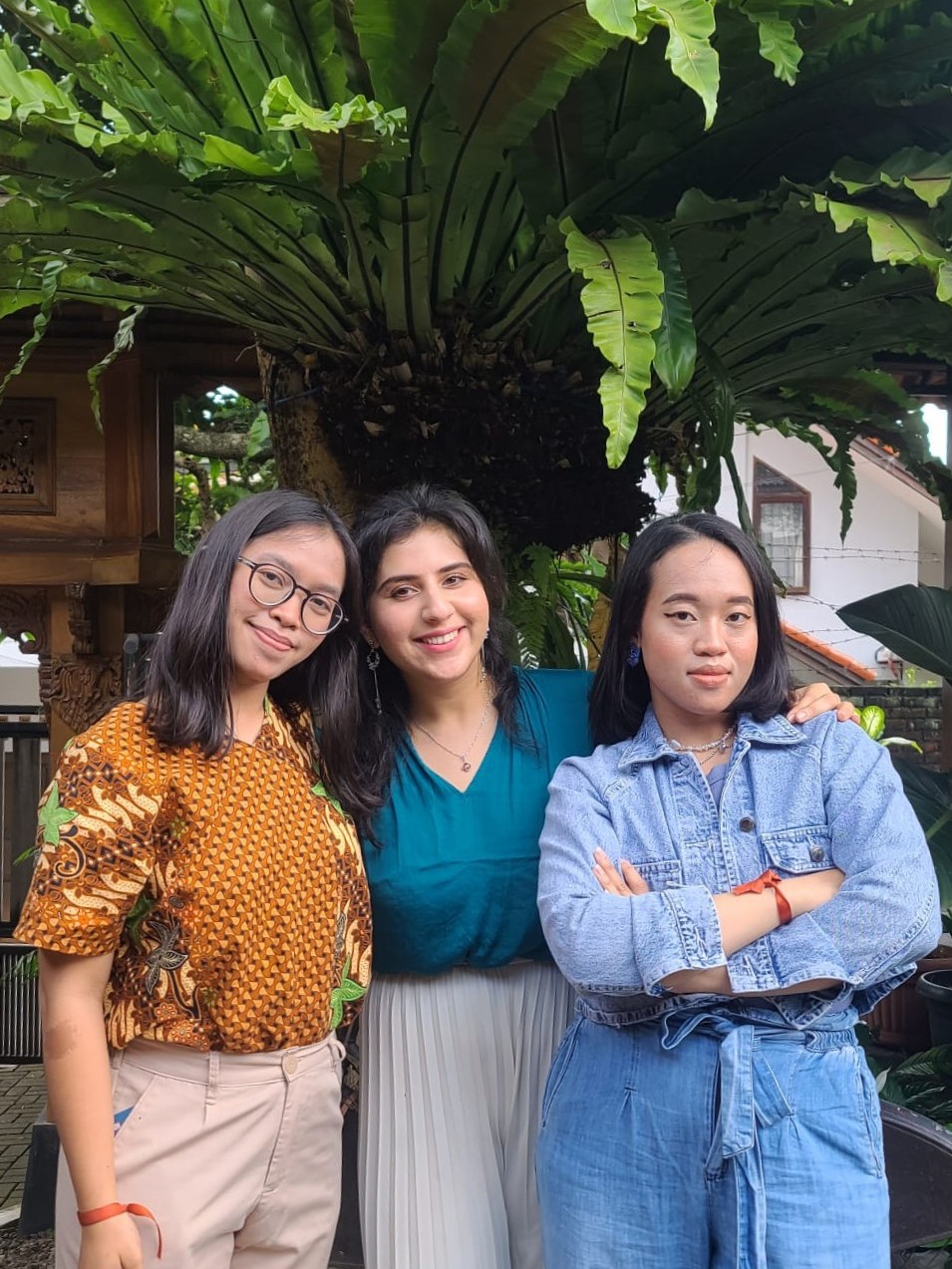

The sentence above is not only for the tagline but as a young generation, we have a massive responsibility to make a change for a better world. Gladly, we were selected to participate in ISC 2023. The event was held for 5 days in total which also became our goal in early 2023. First Day on 3rd January 2023, we joined the opening ceremony and we got a Keynote Lecture with speakers from UNPAR and outside University. As a UNPAR speaker, he was Yulius Purwadi Hermawan, Drs, M.A., Ph.D. from the International Relations Department. He teaches us about what exactly Inclusivity and Welfare are. And the second keynote was Mr. Fillipo Gavazzeni, who was from the Milan Mayor’s Office and focused on the Urban Food Policy Pact. Not just a handsome and hot lecturer but he is also giving us the audience how important it is to focus on our food and how it can damage all aspects of life if we don’t take some action. Luckily, Mr. Gavazzeni has some recommendations for what we should and shouldn’t do.
Could we introduce our Foreign Friends? We’re so excited to introduce them!
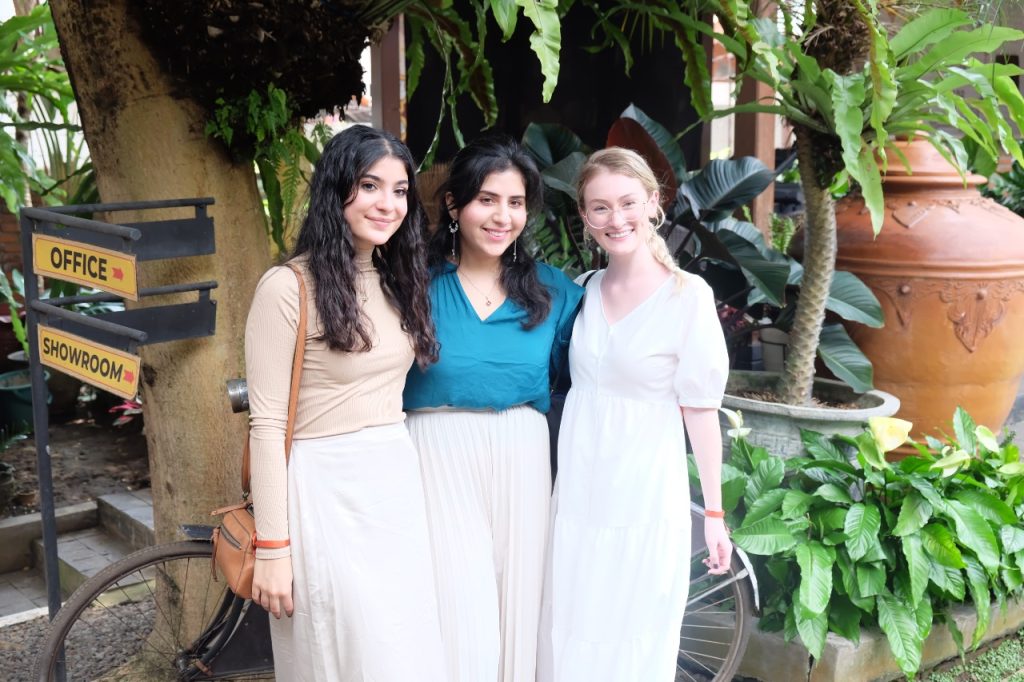
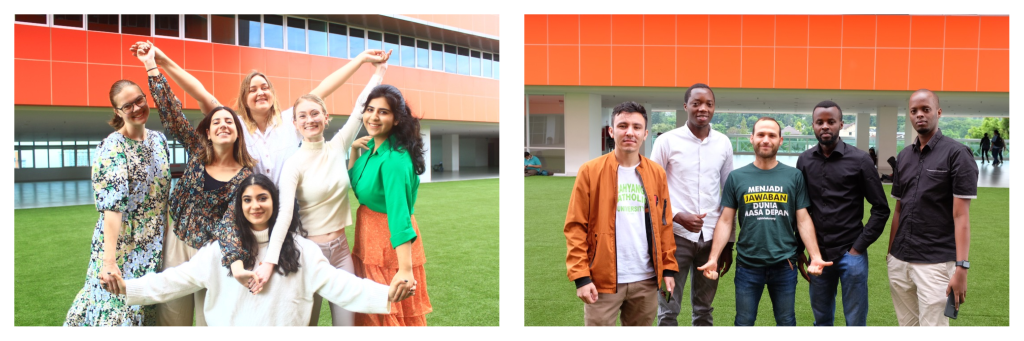
From the JMU pals from The USA, we have three musketeers. They are Shukrana, Bella, and Casey. These three people are close to us because we spend a lot of time during the ISC. We love to have dinner with them. We talked to them, laughed, and we were so thankful because they can accept our gibberish English. Also, we have Malmo pals from Sweden. They are Alexandra, Vilma, and Nassim. We are beyond happy to know them. Especially they share a lot of their experience as a Vegan and Vegetarian. With gladly we can meet Nodoka – a Japanese girl and the calmest girl of anyone, and friendly. She is from Hiroshima University and she almost finished her study. Actually many master’s students in UNPAR also joined ISC. They’re so adorable and all Men – we love talking with them because they are UNPAR pals like us. Last, we had a conversation with URV pals – they are Nerea, Anna, and Aldrian.
“We hope luck comes our way and we can meet again. Miss yall!”
How about the workshop?


Actually, there are a lot of workshops that provide us to understand the topic of inclusivity and welfare. Such as Inclusivity and Accessibility in Higher Education by Niclas Anderson, Solutions to Promote Education and Labour Market Inclusion for Persons with Disabilities in Ordinary Environments by Immaculada Rosell, Content Creating by Christian Fredy Naa, Design Thinking by Dr. Johanna Renny Octavia Hariandja, and MSME as A Post-pandemic Lifeline by Ferran Mane Verne, MSME as A Post-pandemic Lifeline by Jimmy Febriady. All of the workshops here are interesting and very memorable for us. But, there are two workshops that we actually like. There is Mr. Anderson, who teaches how minor facilities such as one right-sided chair, and the ‘too-bright’ presentation on the wall, can be difficult for some people. This is an example of how facilities can be disabled for someone else and it’s not inclusive at all.
The site visit is very interesting! Here’s why!


On the second, third, and fourth days, there are site visits which we as participants are very interested in. Even though we are local participants, the site visit itself is very interesting. We’ve been doing so much fun and figured out how to make Batik in Batik Komar, how to play Angklung in Saung Udjo, how to manage, contribute, and take the reflection on what nature give to human in Eco Camp, and lastly, we learned how to appreciate the arts of disabilities people in Tab Space. The most interesting part of the site visit is the Eco camp and Tab Space. In Eco camp, first, we took a short meditation to be aware of nature’s gifts; second, we learned how to make compost from organic waste; third, we look around the eco camp area to see organic plants and the kitchen where compost was made off; fourth, we ate vegetarian foodies and for us, that’s the best menu during the ISC! Tab Space also is a very interesting one because they empower disabled people through art. They provide the artist with workspace, demonstrating their abilities through exhibitions, selling works or merchandise, participating in and winning competitions, and working with designers to provide visual assets for clients.
Group Project and Closing Ceremony is a MUST!
Emma and the group got First Place. How could it be? Let’s talk about it !
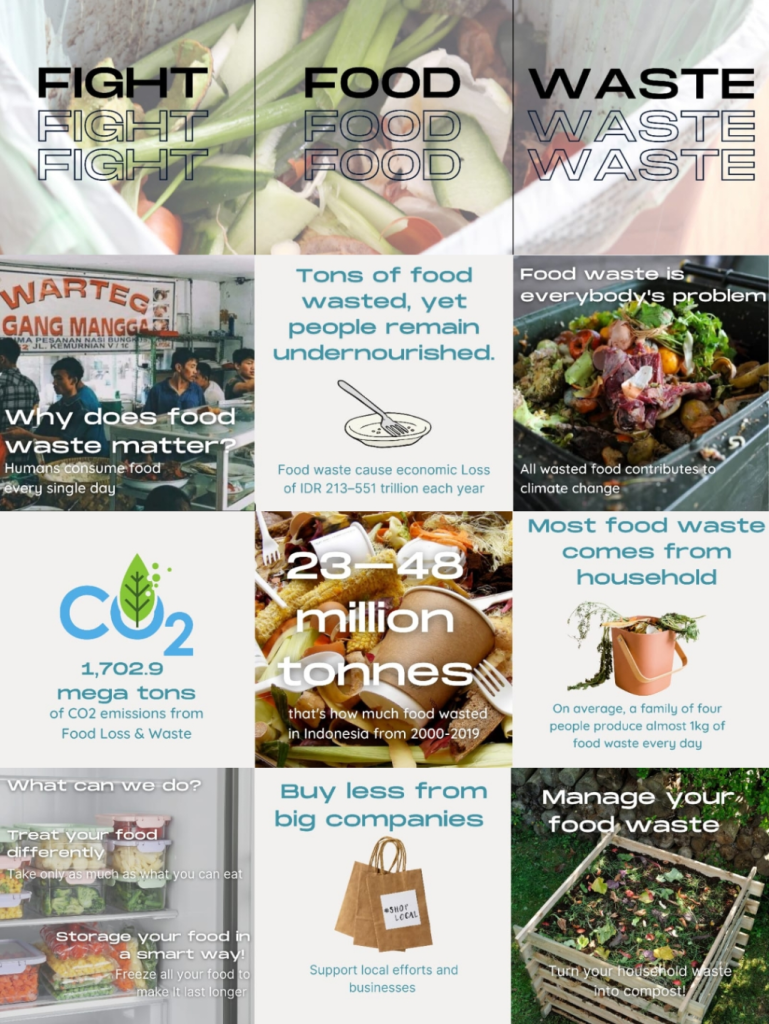
The topic is Food Waste – Addressing the issue through SNS Campaign. Why did we choose this topic and what goals do we hope to achieve with the suggested campaign? What we can see is that food waste is a common experience in different countries across the globe. Food Waste is found everywhere there is food: in hotels, restaurants, schools that serve lunch, by big companies, and a lot of small companies, individuals, families, and parties creating food waste is not an active and intentional doing of harm, but we all can decrease our own personal food waste starting now. We think we can do a social media campaign right now, planning a company would not be actual action, but by creating a campaign for this project, we are effectively creating real change. The impact on economic losses reaches IDR 213–551 trillion per year. Data shows that the production of Food Loss & Waste in Indonesia from 2000 to 2019 reached 23–48 million tons per year, which is equivalent to 115–184 kg per capita per year. The amount of the pile is equivalent to the energy loss from a portion of the food of 29-47% of the Indonesian population. The total amount of greenhouse gas emissions from Food Loss & Waste reached 1,702.9 megatons of CO2. We found that households waste the most. People make food at home but then decide to order in, leading to wasted food being an issue in the household means we are responsible for fixing it. Further, organic Waste makes up 60% of food waste and Non-Organic Waste makes up 40%. The Data said 68% of rivers in Indonesia are heavily polluted, Citarum (still) the world’s most polluted river. Food waste is mainly generated by the habits of everyday Indonesian people. This is why there is a need to rethink one’s position and behavior, reduce one’s food waste, and repurpose what one is doing with food waste. Having understood all of these, we tried to come up with some specific solutions that could help reduce one’s own food waste.
- Use other businesses – those that repurpose food, and give it a longer lifespan e.g.: Too Good To Go, Surplus, Seroja Bakery (rice-bran, rice-flour, cassava flour, seasonal foods)
- Treat food differently, use the freezer instead of the fridge to store your food so it doesn’t go bad as fast, and change your preparation method!
- Buy less from big companies who are known for wasting a lot of food (e.g Starbucks)
- Change your food behavior: cook differently or use different, sustainable food trends and habits, Practice / Aspire
- Deal with your food waste: Compost (like we saw at the eco camp), cook with what you would discard i.e cassava skin to chips
The reasons why we go for social media campaigns are that visual learning through images, bright color, and figures are much easier for people. We are not the only ones responsible for food waste. There are indeed huge industries, but this is the one thing we can do ourselves.
What do we have in ISC as Public Administration students?

It’s actually a lot! As a department that focuses on Governance affairs, it is very important for us to be aware of inclusivity and welfare for everyone. As the future of administrators, we must make a policy to include everyone in any aspect of disability, physically and mentally. Such as public facilities that can be used by disabled people and are very easy for them. However, this can be happening only if the people themselves understand how important it is to take care of public facilities and prioritize disabled people. And of course most important is how the government has more concern to provide public facilities more inclusive for everyone. For welfare, there’s always praise about “we can see the Government succeed is by how they provide people welfare”. We believe all of us want the best So, in conclusion, not just one department can join the International Student Conference, but we as student administration can join the ISC itself.
Imanuela Ekaristi
Maria Sekar Nugraheni Cahyaningtyas